Husky welfare on Tromsø sled tours
The dogs are the reason you book, so it is fair to ask how they live. The big Tromsø kennels are working kennels with well over a hundred dogs each, and a well-run one is not hard to recognize once you know the signs. This guide sticks to general signs and good questions, not verdicts on any single operator.
What an Alaskan husky is
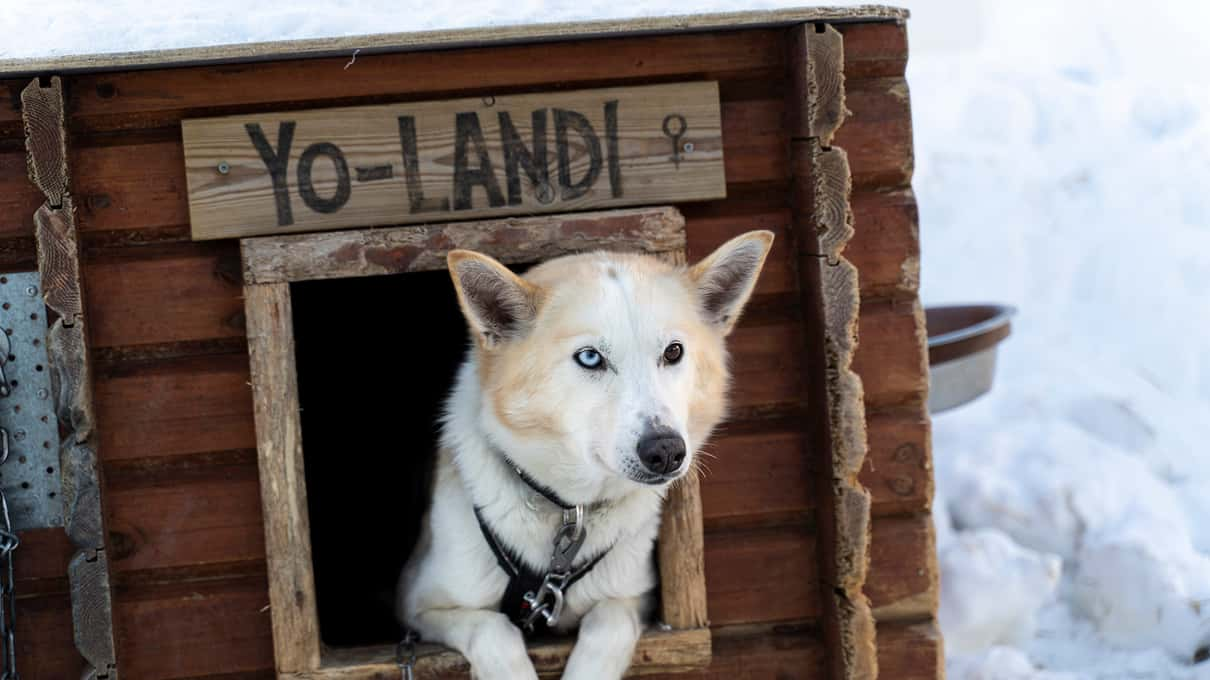
The dogs on Tromsø sled tours are mostly Alaskan huskies, and they are not a breed in the show-ring sense. They are working mixes, bred over many generations for their urge to run and pull. Next to a Siberian husky from a dog show they are lighter and faster, and they come in all sorts of colors and coats. Plenty of them do not have the blue eyes people expect.
That breeding explains the noise when you arrive. As soon as the harnesses come out, the yard erupts in barking and howling, and the dogs left behind for a run complain loudly. That is excitement, not distress. Once a team is moving, it usually goes quiet. Sled dogs are endurance athletes. Dogs of the same type run Finnmarksløpet from Alta, Europe's longest sled dog race at about 1,200 km. A half-day tour at a guest's pace is light work by comparison.
How many dogs the kennels keep
The numbers surprise first-time visitors. Arctic Adventure Tours keeps 130 Alaskan huskies at its kennel on Kvaløya, and the Tromsø Wilderness Center has 200. That is normal for a working kennel. In general each sled needs its own team, teams take turns so that dogs get rest days, and a kennel also houses puppies in training along with older dogs that have stopped running.
A big kennel is not a bad sign in itself, and a small one is not automatically better. What counts is how the dogs are housed and handled, and whether the staff know them as individuals. Where each kennel is covers the three areas the tours drive to, from Kvaløya to the Tamok valley.
Signs of a well-run kennel
You learn a lot in the first ten minutes at the dog yard. These signs hold at any kennel in northern Norway.
- Dogs that want to run. Eager, noisy dogs straining toward the trail are the norm. Dogs that cower from people are not.
- A dry place for every dog. Each dog should have its own house with bedding, out of the wind.
- Food and water routines that the guides can describe without hesitation.
- Clean yards. Snow gets messy fast with this many dogs, so regular cleaning shows daily care.
- Guides who know names. Good handlers can tell you which dogs lead the team and which ones are young.
- Calm handling. Dogs are clipped in and out of harness without shouting or rough pulling.
- Rest between runs. The same team should not go out again and again in one day without a break.
Why weight limits and rest exist
Weight limits look like a rule about guests, but they protect the dogs. Arctic Adventure Tours sets 170 kg (375 lbs) per sled for two people. On the Tamok tours no single rider may exceed 120 kg (264 lbs), and the Wilderness Center self-drive draws the line at 118 kg (260 lbs). A healthy team pulls that comfortably on a groomed trail, but every extra kilo shows on a climb. That is also why several listings ask guests to push uphill. On the Fun and Easy tour at ~$301 you help push on the open terrain when needed, and the advanced Camp Tamok tour at ~$268 expects hard uphill pushing from riders aged 16 and up.
Pace matters too. The Husky Experience at ~$228 runs at a slow pace for 10–15 minutes each way. On thin snow the Fun and Easy tour switches to wheeled wagons instead of sleds. A kennel that changes its plans when conditions are poor is looking after its dogs, even if it disappoints a guest. When the snow is thin explains the options in early winter.
Two hundred dogs and their puppies
The guided ride from the Tromsø Wilderness Center, from ~$352, starts with a tour of the yard where 200 Alaskan huskies live, plus a visit to the puppies. Ask the handlers anything you like about how the dogs are kept.
Questions to ask before you book
Most kennels are glad to talk about their dogs, and the way they answer tells you as much as the answer itself. Send a message through the booking page or ask your guide on the day.
- How many runs does a dog do in a day, and how many days a week?
- What happens to the dogs when they retire from running?
- Who looks after the dogs in summer, when there are no sled tours?
- Does the kennel work with a vet on a regular basis?
- At what temperature or snow depth do you change or cancel a tour?
- How old are the dogs in the teams, and how do young dogs learn the job?
Good kennels answer these without fuss. In general, retired sled dogs are adopted out or stay on at the kennel, and many kennels keep their dogs fit in the snow-free months with carts or walks. The Wilderness Center, for example, runs a snow-free husky hike at ~$170 with the dogs on leads.
What guests should not do
Most problems at a dog yard start with kind intentions. A few house rules apply at every kennel, whatever the listing says.
- Do not feed the dogs. Snacks from your pocket upset working diets, and food handed out in a yard can start squabbles.
- Never unclip a dog or open a gate. A loose husky runs, and it may not come back.
- Ask before you pet. Most dogs love attention. A few prefer to be left alone, especially while they eat.
- Keep children close and teach them not to run or shriek among the dogs.
- Stay with the sled. If you fall, hold on to the handlebar and never let go, because a team without a driver keeps running. Our first-time mushing guide covers the brake along with the briefing.
- Leave the drone at home. Arctic Adventure Tours bans drones, and a buzzing machine over a yard of 130 dogs helps nobody.
Choosing a tour with the dogs in mind
You do not need to research every kennel in detail. The main tours on this site come from established kennels with thousands of reviews between them, and you can judge the rest with your own eyes on the day. A tour with time in the dog yard before or after the ride lets you see how the dogs live. Our pick, Arctic Adventure Tours at ~$349, builds in time with the dogs on both sides of the ride, and a dog yard tour is part of the guided Wilderness Center ride.
Cruise passengers on a short call do not have to choose between the ride and the yard, since the half-day tours fit both into about four hours. The yard is also where the best pictures happen. Give working teams space and skip the flash near their faces. Our photography guide has tips for shooting in the dog yard, and our family guide covers children around the dogs.